
 简体中文
 Pусский
 Español
 العربية


The basic concept of low-temperature baked food: it is to put the raw materials in a low temperature of 90 ° C -120 ° C in the oven for baking, and then use the dryer to dry and dehydrate. Pet low-temperature baking grain, most of them are put raw materials into the oven about 80-100 ° C (different manufacturers have different production processes), the use of low-temperature baking method, so that the feed is slowly matured, baking and molding, the particles are crisp and easy to digest, the surface is dry and not greasy, slowly matured granules without air chamber, the surface does not spray oil, does not spray seasoning agents, the unit volume density is relatively low, and the original nutrition of the ingredients is maintained. (As long as it is baked food, baked or Chinese baking will be written on the packaging.) )
The processing process of low-temperature baked grains is: raw material preparation→ crushing sieved→ mixed ingredients→ extruded → cut sections→ low temperature drying → cooling → finished products.
Our Shandong Arrow Machinery Co.,Ltd. baking grain is divided into cold-squeezed baked food and cold-pressed baked food. The above drying temperature is a manufacturer's publicity gimmick, and the actual drying temperature is 110-140 degrees.
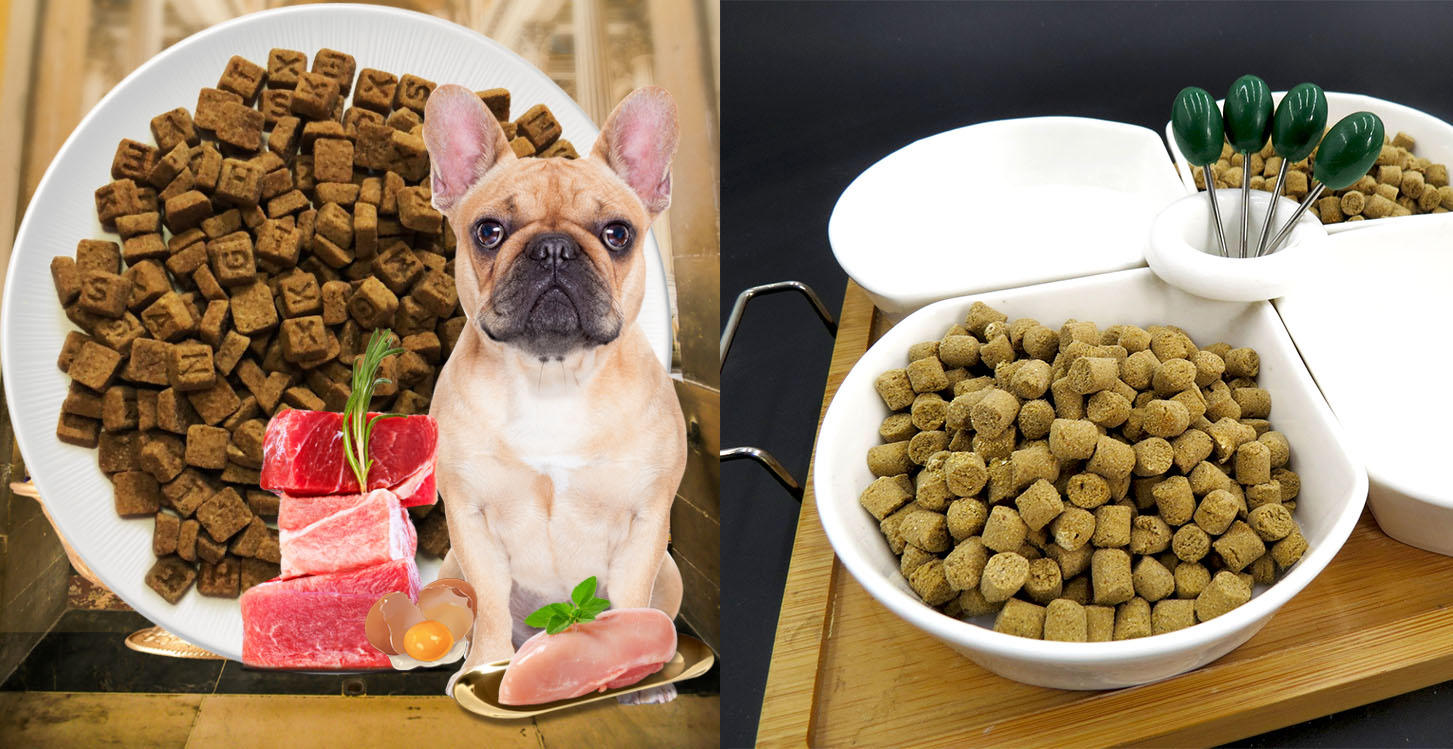
Dr. Aldrich of Kansas State University in the United States and Dr. Hans-Jochen Büngener of Germany conducted a special experiment to study the difference between baked grains and puffed grains. Conclusions were obtained: (1) Compared with puffed grains, baked grains are a more uniform-looking, light brown pet food. Baked grains are lower than puffed grains in terms of quality adhesion, hardness and initial brittleness, but have more powder and coating needs, mainly due to the lack of mechanical energy input during the baking process, resulting in limited starch gelatinization in baked products. (2) Baked grains have more bitterness and aftertaste, and the remaining flavor characteristics (such as grain aftertaste, salty aftertaste, bitter aftertaste, vitamin aftertaste, musty aftertaste, butter aftertaste and fish aftertaste) are lower than puffed grains.
The production of pet cold pressed food: the raw materials are processed and powdered first, and then the raw materials are pressed and formed in an ultra-low temperature and low pressure state of about 45 ° C, and then slowly baked and dehydrated, and then sterilized and packaged, and the cold pressed grain is made.
Now for the treatment of pet cold-pressed food raw materials, there are generally two kinds, the first is to cook the raw materials (meat, etc.), and then crush all the raw materials together, and then cold pressed production; The second is to carry out biological fermentation enzymatic digestion of raw materials, first improve the quality of raw materials and increase nutritional value, and then carry out cold pressing. Regardless of the treatment method, the purpose is to allow the pet to be able to better absorb and digest. And because the cold pressed grain is pressed and formed, it declares that after the animal feeds, the cold pressed grain will decompose into a paste layer by layer, and will not expand and float in the stomach of the dog and cat, which is conducive to the full mixing, decomposition and absorption of gastric digestive juice and grain, so it is conducive to the digestion of dogs and cats.
We currently make cold-pressed baked grains, crushed and ground enough fresh meat (no need to steam and cook) + grease + powder mix, press, dry. Or enzymatic treatment of meat pulp + grease + powder mixing, pressing, drying.


